
The Importance of Reading To Your Child
The Importance of Reading To Your Child
“ The more that you read, the more things you will know. The more you learn, the more places you’ll go.”
Dr. Seuss
You may hear that reading is important for children’s brains and wellbeing. You might have heard that reading in a loud voice to your baby is important. We explore what that means in this article.
Reading aloud means reading books together: where the adult reads out loud and the child listens or joins in.
Reading introduces children to words they may not hear in everyday conversation. Stories help them build their vocabulary and understand words, sentences and language better. This idea is called “scaffolding.” It means that during shared reading, adults help children understand new words, ideas, and stories. Over time, children gradually need less help and become more confident readers and speakers. Reading together helps your child make sense of the stories, pictures and ideas that are in the book.
Why read aloud to your child?
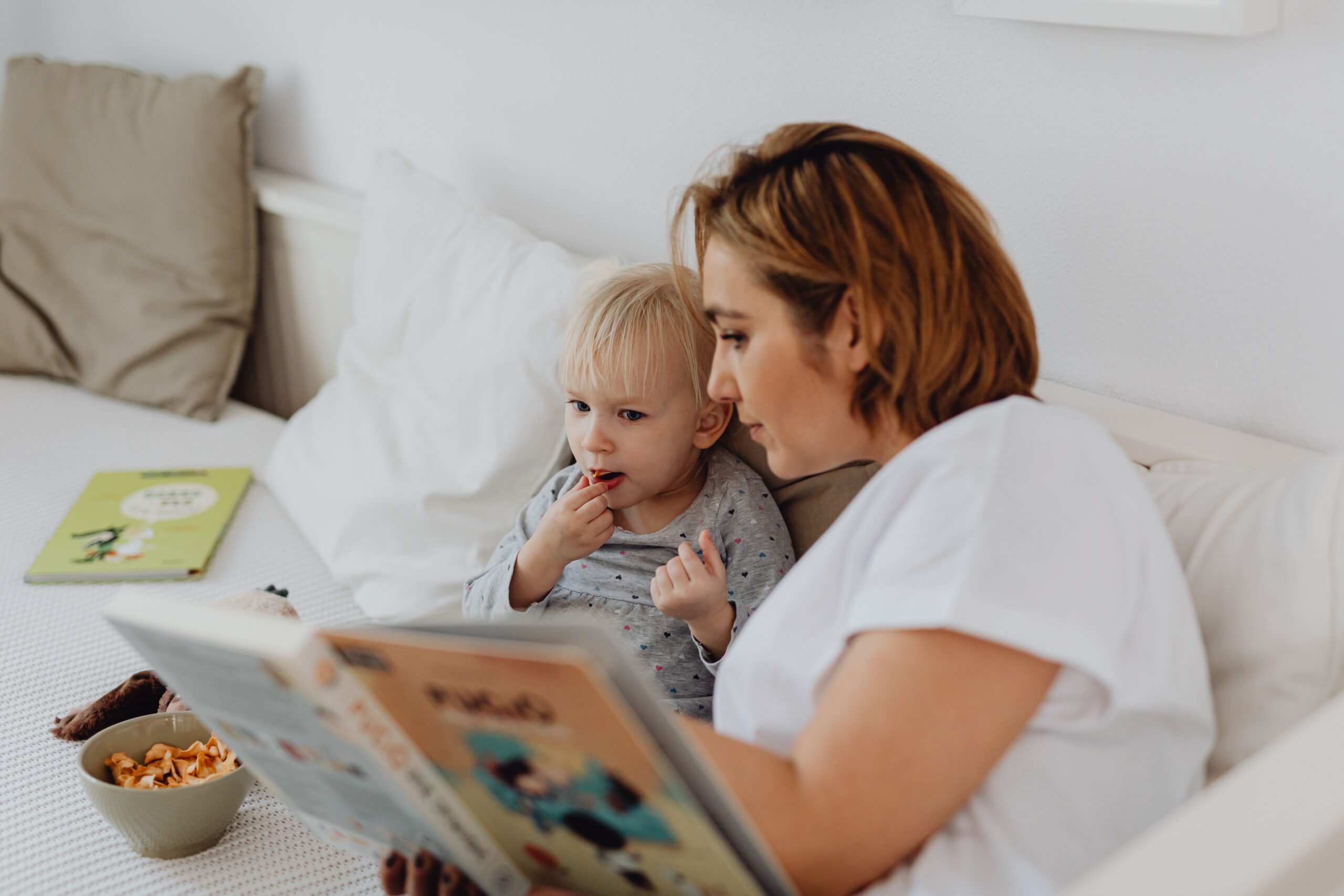
There are many benefits to reading aloud to your child. These include:
- Spending quality time together
- Strengthening the bond between parent(s) and child
- Helping your child learn new words
- Helping your child learn new ways of putting words together into sentences
- Teaching your child new ideas and information
- Sparks imagination and curiosity
- Improving your child’s listening and speaking skills
- Helping your child understand feelings and help with their social development
- Boosts positive mood in the adults reading [5]
What to read to your child
You can read in English, Arabic, Indonesian or any language spoken at home. Choose a book in any language that you feel comfortable in! Your child will still benefit and help your child’s learning, language and connection to their culture.
You can visit your local library to borrow books or purchase books from bookshops, department stores, or second hand shops.
The kinds of books you read to your child do matter, especially as your child gets older. Choose books that match your child’s age and interests. Picture books, storybooks, and even simple informational books are all helpful. Look below for ideas on choosing suitable books for your child.
Newborn (0-3 months):
- Some parents like to show babies black and white books (0-3 months) before they are able to see colours
- You can read anything you like to a newborn as they cannot understand words, so hearing voices matters more than what is being heard
- Babies respond to rhythm, melody, and emotional tone of speech [3].
- You can read a cookbook, a chapter book, a religious text or an academic textbook. Your newborn will love hearing your voice and spending time with you!
3-12 months:
- Light and sturdy books that can be held by the infant. As they grow older, ask them to turn the pages
- Colourful pictures
- Textures, flaps, pop-ups to make reading more interactive
- Books with nursery rhymes or songs
1-3 years:
- Simple stories
- Stories with only a few characters such as people or animals
- Concepts that include numbers, colours, shapes
- Rhymes, poems or songs
- Engaging, colourful pictures
- Many families like to create a ritual of reading 3 books before bed time to help children unwind
3- 5 years
- Longer and more detailed stories
- Books about real life, feelings, new ideas, and everyday routines
5+ years:
- Even if your child has started reading on their own, continue to read books aloud or encourage them to read to you. This supports ongoing development and learning.
- Reading together can also help you talk about important topics, such as feelings, friendships, and school.
When to read
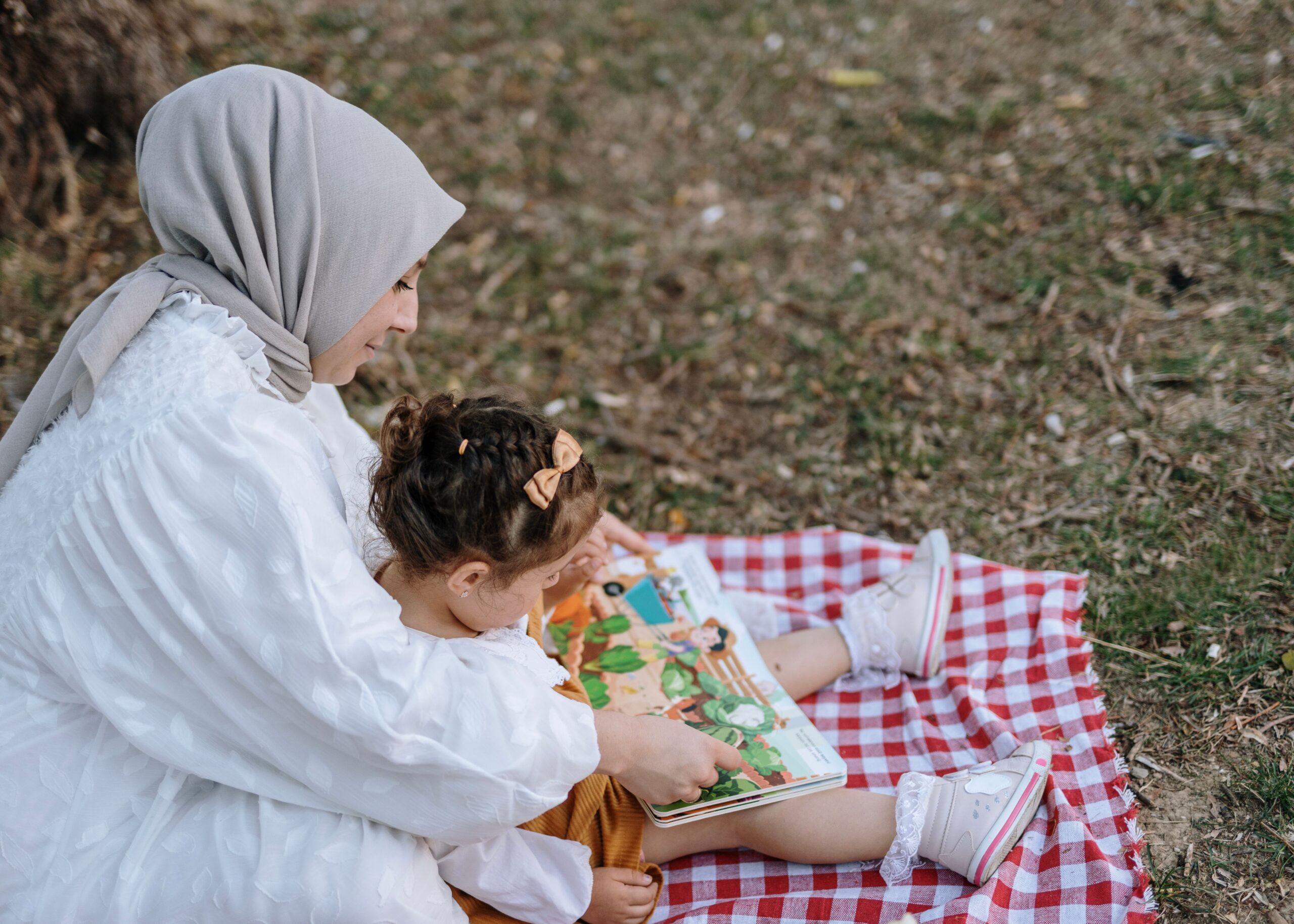
There is no best time to read together. Any time during the day that works for your family is good. This can be:
- After dinner
- Bedtime
- Bathtime
- In the park
- In the train or bus
You can start making a reading routine with your child while they are an infant, starting with 5-10 minutes a day. As they get older, you can make these sessions longer to 15-20 minutes a day. The key is being consistent and making this a part of your daily routine to build your child’s brain and set them up for a good start in life!
Interactive reading:
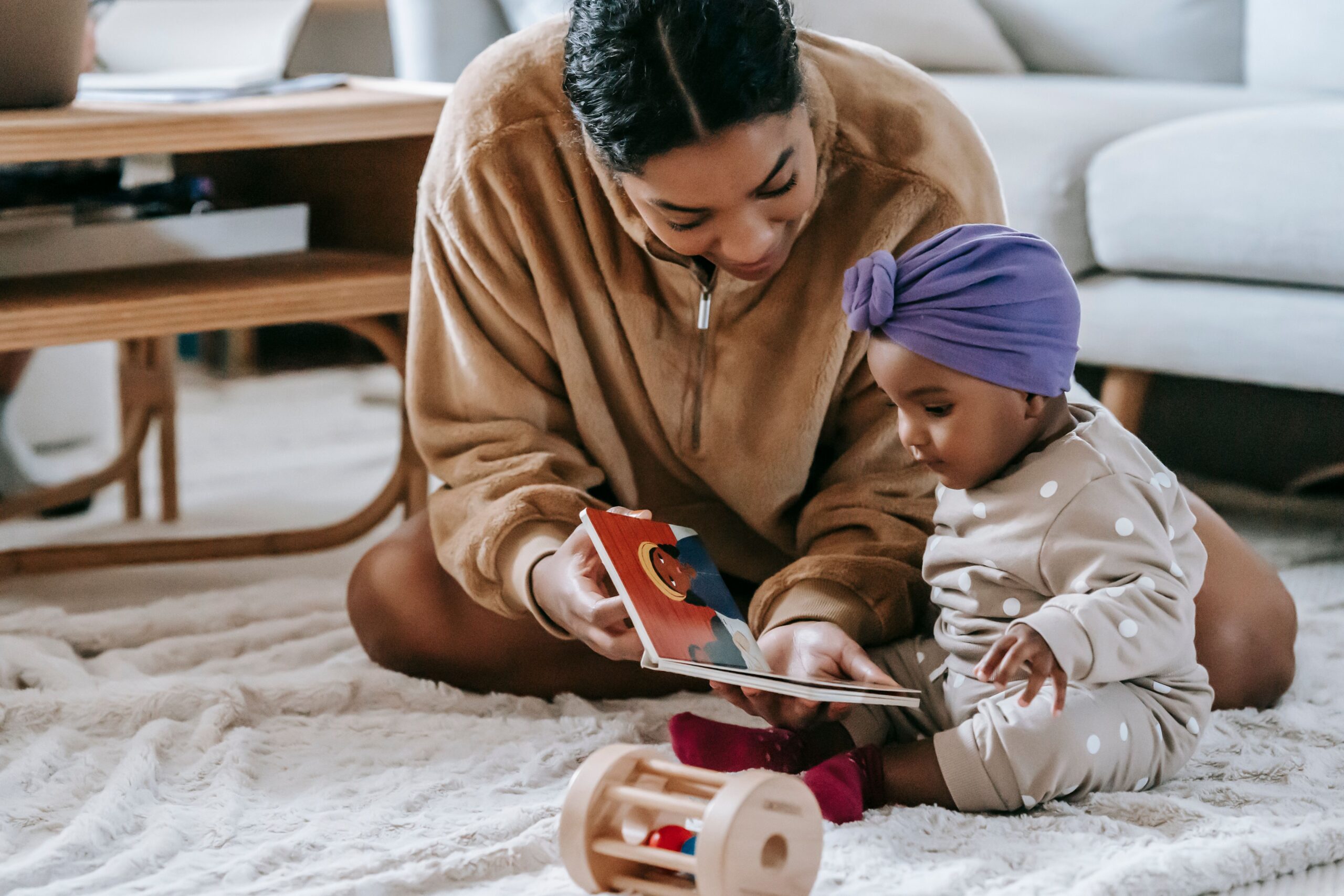
When your child is a newborn, simply reading aloud is enough. As your child gets older and begins to speak, you should involve your child into the process of reading rather than simply reading to them.
This can be done by:
- Asking your child to hold the book, turn the pages, and point
- Asking your child questions about the characters and story – “Does the elephant look sad? Why?”
- Ask your child to describe what they see in the book
- Encourage your child to share their reactions and feelings
- Talking about the setting, characters and events in the story
- Asking your child what the story was about and what happened in the end
Extra tips for reading aloud:
- The process of reading is itself beneficial – if your child wants to spend 10 minutes on one page, they are deriving deep benefits and should not be rushed
- Children often want to read the same book hundreds of times to solidify their learning – let your child guide you. Do not rush your child to finish a book or read many different books. Let them choose
- Create a comfortable environment without distractions from the TV, phones or other screens
- If you sense or see that your child is not enjoying the book, you should stop. You can try a new book or pick up reading at a later time
- Use funny voices, noises, facial expressions and hand gestures to make the story even more interesting. This is a fun way to help them learn the meaning of words!
- Make links between your child’s life and the story. For example, “That girl is eating a sandwich. What did you eat today?”; “The elephant is angry. What makes you angry sometimes?”
Reading aloud is a simple but powerful way to support your child’s learning, confidence, and connection with you.
- Sheldon-Dean H. Why is it important to read to your child? Child Mind Institute. [Internet]. Updated 2025 [cited 2026 Jul 3]. Available from:
https://childmind.org/article/why-is-it-important-to-read-to-your-child/ - Victorian Government. Reading with children (interacting with others) [Internet]. Melbourne (AU): State Government of Victoria; [cited 2026 Jul 3]. Available from:
https://www.vic.gov.au/literacy-teaching-toolkit-early-childhood/teaching-practices-interacting-others/reading-children - Kuhl P. K. (2004). Early language acquisition: cracking the speech code. Nature reviews. Neuroscience, 5(11), 831–843.
https://doi.org/10.1038/nrn1533 - Raising Children Network. (n.d.). Reading and storytelling with toddlers. https://raisingchildren.net.au/toddlers/play-learning/literacy-reading-stories/reading-storytelling
- Rabinowitz, S., Pavlov, C., Mireku, B., Ying, K., Zhang, J., & Read, K. (2021). I feel less blue when I read with you: The effect of reading aloud with a child on adult readers’ affect. Frontiers in Psychology, 12, 706729.
https: //doi.org/10.3389/fpsyg.2021.706729